
Digital Manuscript Rolls
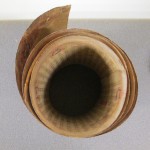
UPenn, MS Roll 1563: Digital Facsimile
Published June 2014. Through the University of Virginia’s Rare Book School course, “The Medieval Manuscript in the 21st Century,” taught by Will Noel and Dot Porter at the University of Pennsylvania Kislak Center for Special Collections, Rare Books, and Manuscripts, I designed a digital facsimile of a devotional/prayer roll from 15th-century England. My article describing the manuscript and its texts appears in Notes & Queries 63.2 (June 2016): 196–199. Click here for more information about the manuscript and for access to all aspects of my digital project.
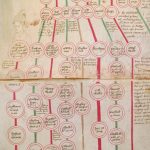
Emory’s Fifteenth-Century English Chronicle Roll
On February 27-28, 2018, I organized a digital editing workshop for twelve graduate student participants from across the United States; the workshop was hosted by Emory’s Rose Library and Pitts Theology Library as part of Yale University’s Digital Editing and the Medieval Manuscript Roll (DEMMR) project. Following the workshop, I posted a digital facsimile to make Emory’s fifteenth-century English chronicle roll (Emory University; Stuart A. Rose Manuscript, Archives, and Rare Book Library; Ancient, Medieval, and Renaissance Eastern and Western Manuscript Collection; Box 2, Folder 1) accessible to other scholars and the public. The roll begins with the seven days of creation and concludes with Henry V. A sixteenth-century English addition to the roll updates the genealogy to Queen Elizabeth. The zoomable high resolution image of the manuscript is available here. A video of my presentation, “Emory’s Fifteenth-Century English Chronicle Roll: Late Medieval History Writing and Sixteenth-Century Nobility,” from the March 1, 2019 symposium at Emory’s Pitts Theology Library is available here.
Teaching Resources
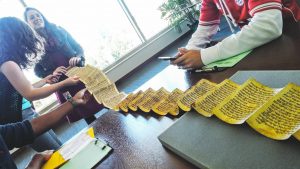
My interests in book history and manuscript studies inspire my teaching, including courses on medieval and early modern literature, women’s literature, and linguistics. To situate literary works within material and cultural contexts, I design courses that prompt interdisciplinary and comparative inquiry. To learn more about my materially-engaged pedagogy, visit my page on Teaching with Material Culture.
I have designed and taught a variety of courses on medieval and early modern literature, often with a focus on manuscripts and material culture, art, and/or gender. For years, I have taught a multilingual, non-chronological early British literature survey course that uses a comparative structure to place multilingualism and multiculturalism at the center of class discussions. To read more about the survey course design and view several versions of the syllabus, visit my page on Teaching a Multilingual British Literature Survey.